WaterColor vs Seaside: amenity model, town fabric, and buyer tradeoffs on 30A
WaterColor and Seaside are two of the best-known names on Scenic Highway 30A, and visitors often treat them as the same “pretty beach town.” They are not. Seaside is the original New Urbanist town: about 80 acres, planned by Andrés Duany and Elizabeth Plater-Zyberk for Robert Davis and Daryl Rose Davis, with construction beginning in 1981. Life centers on Central Square, street-end beach pavilions, and a compact public calendar. WaterColor is a 499-acre master-planned resort community established in 1999 by The St. Joe Company and planned by Cooper Robertson: Beach Club and Camp WaterColor, Western Lake, Town Center, Crossings, parks and trails, and a different HOA and membership reality. Official HOA materials put WaterColor at about 1,021 completed homes (including 117 multi-family units in Town Center), with full build-out planned at 1,063. If you are deciding for a short term rental, second home, or primary home, start with how public versus amenity-campus you want daily life to feel, then confirm current documents for the exact property. The Jonathan Hill Team maps those tradeoffs before you fly.
How does the town fabric feel when you are there?
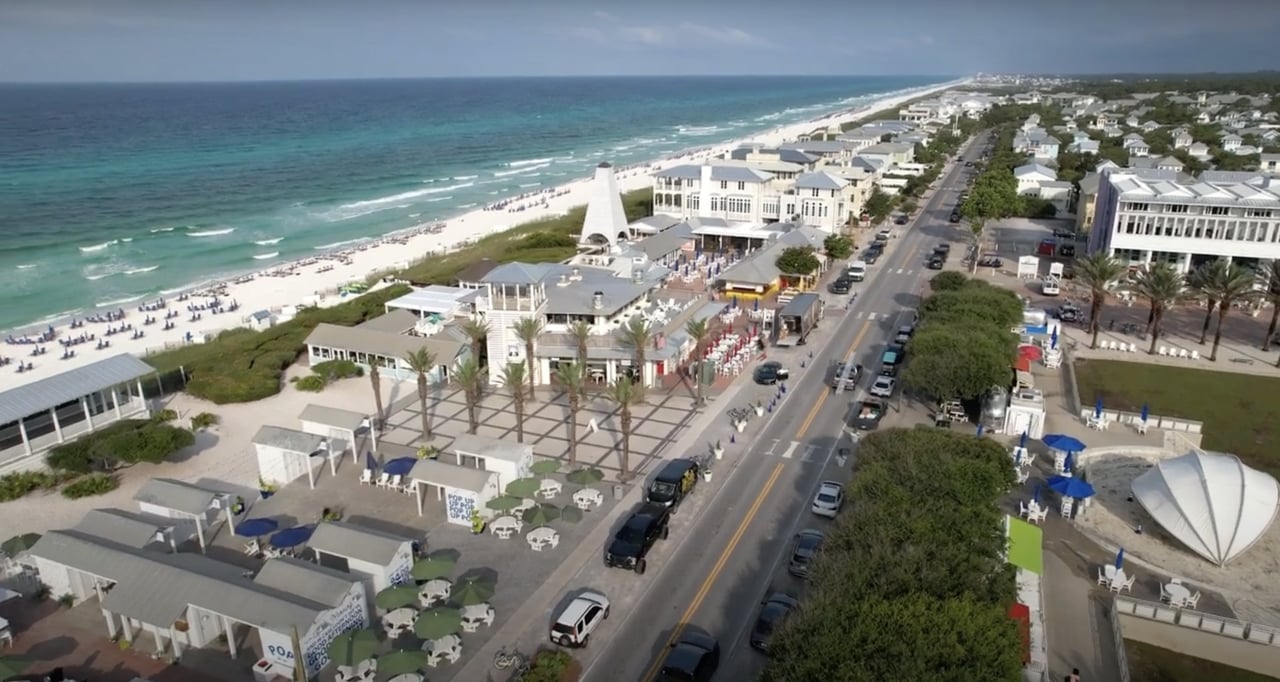
Seaside feels like a dense, walkable town. Central Square is the pivot: shops, dining, amphitheater energy, and the photographed civic pieces (post office, chapel, market culture) sit inside a radial street plan. Official Seaside materials describe destinations within about a five-minute walk of residences and The Court. Narrow brick-paved streets, white-sand footpaths, and front-porch living are the product. Peak season is loud by design. Buy the cottage on a Wednesday in January and ask how the same porch feels on July 4.
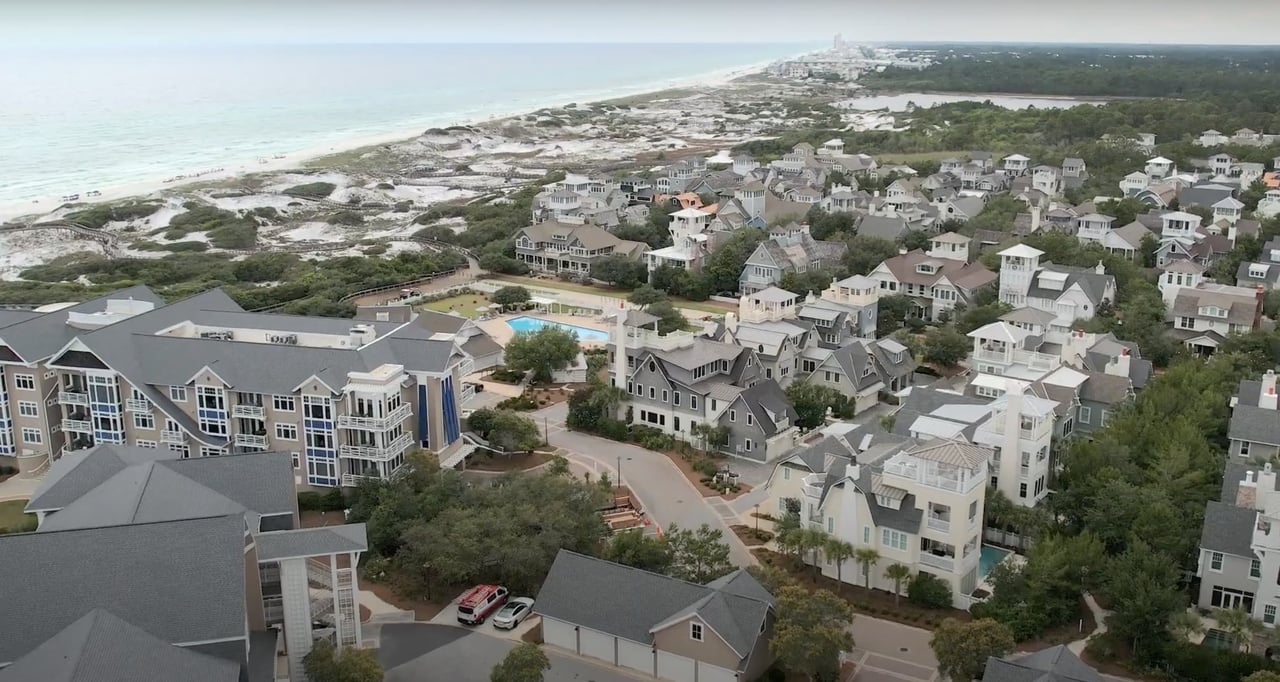
WaterColor feels like a planned community with neighborhoods organized around parks, paths, and amenity nodes. South of 30A you get Beach Club, Inn, and beach-proximate product. North and west you get Western Lake, Camp WaterColor, and quieter residential phases stitched by trails and bridges. Town Center anchors shopping and dining; WaterColor Crossings (including Publix) is why longer stays work without a Destin grocery run every other day. Same coast. Different daily scripts.
In Seaside, you are often choosing how close you want to live to square energy and which street’s pavilion you inherit. In WaterColor, you are often choosing which neighborhood and amenity pattern fits your pace inside a larger campus.
How do amenity and beach-access models differ?
This is the diligence hinge most brochure tours blur.
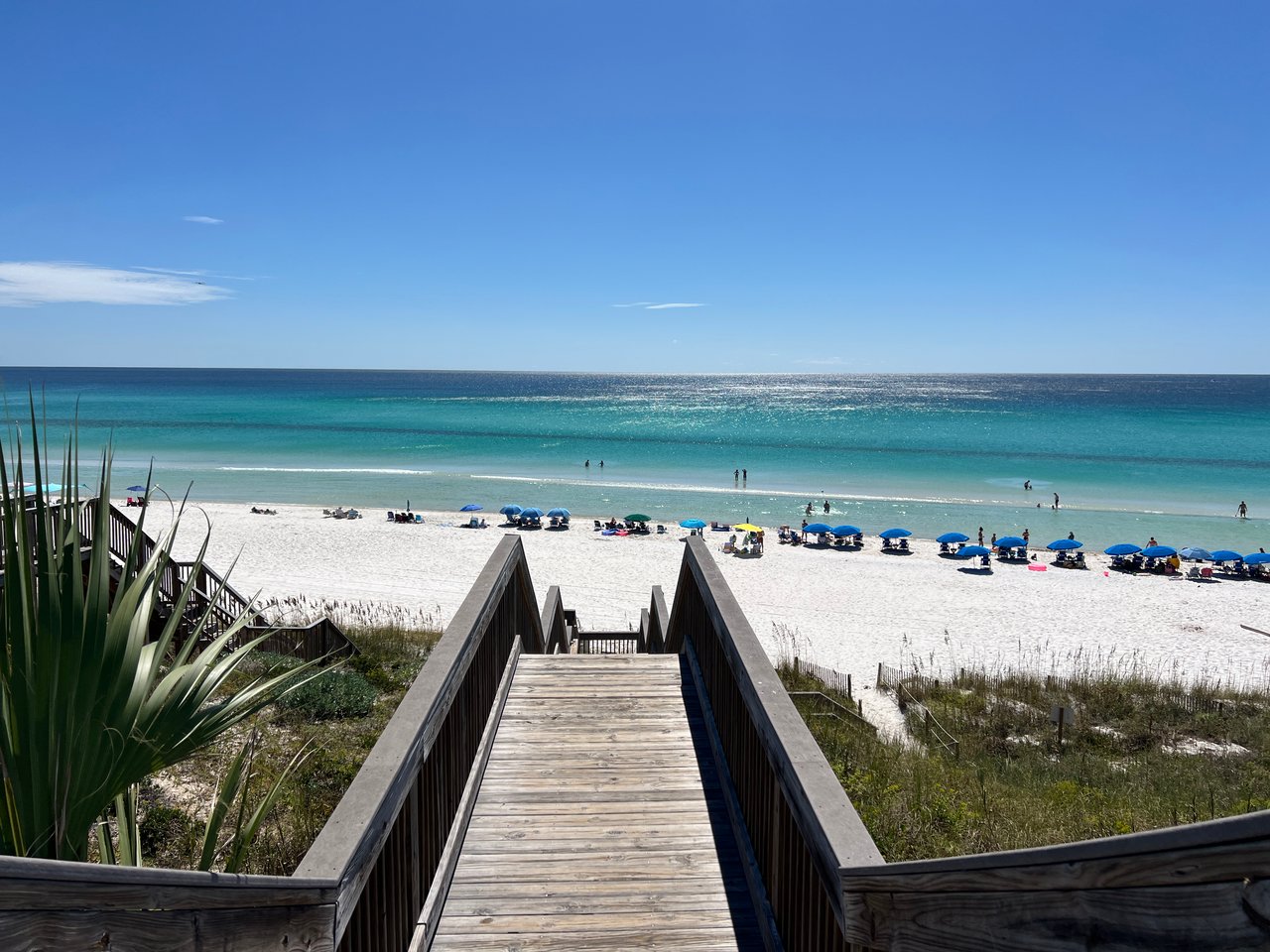
- Seaside beach access is street-pavilion based. Official Seaside FAQ language: when you book a vacation rental in Seaside, you gain access to the specific pavilion on the street where the rental sits. Each street is managed by its own HOA; access follows location and that HOA’s rules. Outside that guaranteed guest access, members of the public may reach the beach at Coleman Pavilion by booking chair rental through the town’s contracted beach service (Cabana Man). Pavilion bathrooms and storage are for owners and authorized guests; wristband programs exist to reduce unauthorized use. Confirm the street HOA packet for the exact cottage before you underwrite “Seaside beach access” as a single product.
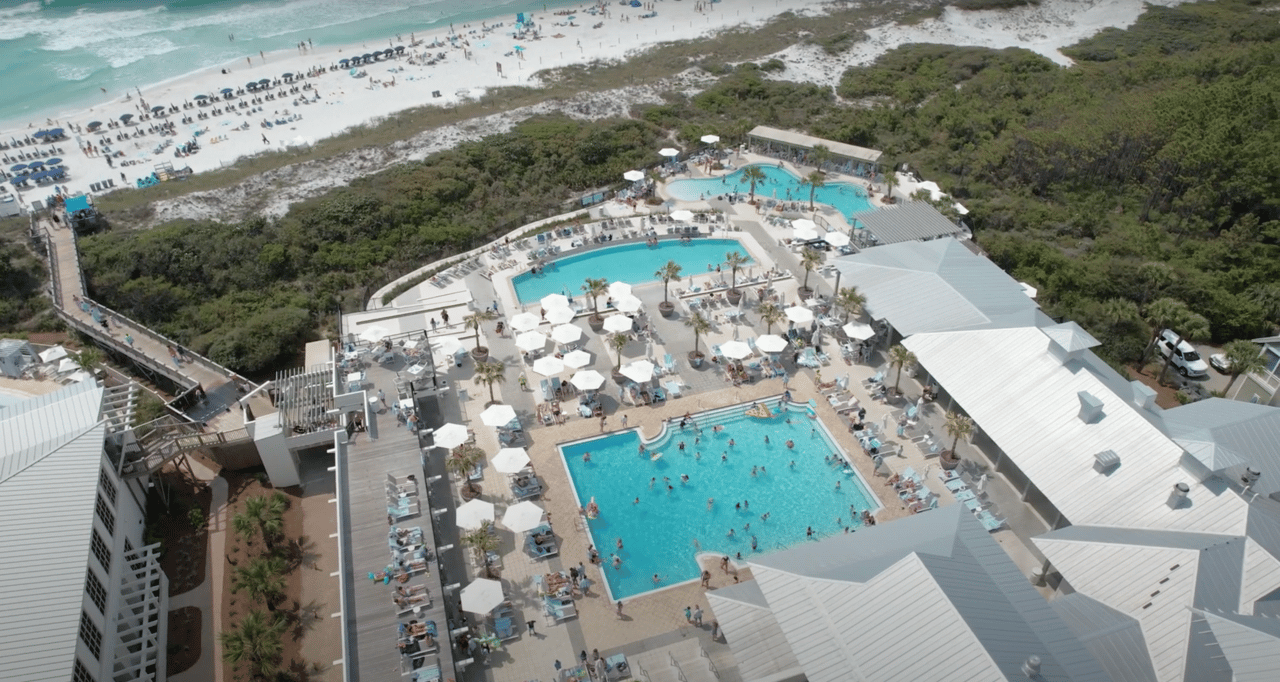
- WaterColor beach and amenity access is campus-and-wristband based. Official WaterColor Community Association materials list on the order of 10 community pools (three at the Beach Club; Camp WaterColor with pools and a lazy river), five clay tennis courts, two pickleball courts, bocce, a half basketball court, a soccer field, a playground, about five miles of hiking and biking trails, four piers and a dock on Western Lake, parks, an outdoor amphitheater, and gardens. The Beach Club is the Gulf-front clubhouse pool shared by residents and WaterColor Inn guests; HOA visitor materials call it the only beachfront clubhouse pool available to rental guests along 30A. Amenity wristbands control Beach Club, Camp WaterColor, community pools, and piers/docks. The BoatHouse Paddle Club operates on Western Lake. Membership, dues, guest caps, and wristband fees change; treat marketing claims as provisional until HOA / club documents for that address are reviewed.
- Practical constraints that change a longer stay (WaterColor). Parking is limited to private driveways, parallel parking pads, and marked spaces; street, sidewalk, pathway, and pine-straw parking are prohibited. Boats and RVs are not allowed to park in the community. Low-speed vehicles: Electric Cart Company is the exclusive cart operator; HOA FAQ states one LSV per property address, with a community cap on rental carts. Do not underwrite a three-cart compound fantasy.
- Neither amenity story is “better.” Seaside solves walk-to-square and pavilion-by-street clarity. WaterColor solves a deeper amenity campus plus lake and beach in one planned system. Do not assume “Seaside amenities” and “WaterColor amenities” mean the same package.
- How should short term rental, second home, or primary home use shape the choice?
- Short term rental, second home, or primary home use should drive the comparison as much as curb appeal.
- Short term rental. Seaside has a long-established rental and event cadence; pavilion access for guests follows the rental’s street and that street’s HOA. Parking and peak-season foot traffic are where pretty listings fail. WaterColor requires short-term rentals (any rental for less than six months) to register through the WaterColor Short-Term Rental Portal, plus Annual Owner Certification for guest capacity. That is in addition to the Walton County stack: Florida Department of Revenue registration, a DBPR Vacation Rental-Dwelling license when applicable, Walton County tourism development tax registration, then annual county short-term rental registration. A local responsible party must be available 24/7 and able to reach the unit within one hour. The county certificate does not transfer with the sale. Not every WaterColor phase is a rental community; Phase 5 and other products can carry different use postures. Confirm recorded documents for the exact address. Portal “STR friendly” labels are a starting clue only.
- Second home. Second home buyers often weigh Seaside’s walk-to-dinner energy and pavilion theater versus WaterColor’s Beach Club / Camp / lake privacy and longer-stay infrastructure (Town Center, Crossings, trails). Ask how often you want square crowds versus campus calm.
- Primary home. Primary home buyers often weigh January reality: school and service logistics, year-round grocery and parking, how much design review you will live with on every exterior change, and whether you want a compact town or a large planned community. Confirm use restrictions in writing before you negotiate.
- What about HOA and architectural reality?
- Both communities have design and HOA frameworks that limit what you can change on the exterior and how common areas work.
- Seaside. The Seaside Code and Seaside Architectural Review Committee (SARC) govern exterior changes: materials, color zones by gulf-to-forest position, wood fences, native plants, no grass on residential lots, mulch limits, and related sitework. Official town history and code materials still reflect the founding New Urbanist model. Each street HOA adds another layer. The Route 30A Scenic Corridor Overlay can affect parcels contiguous to 30A / 393 / 395. Before remodeling dreams drive the offer, ask for the current design guidelines and street HOA packet.
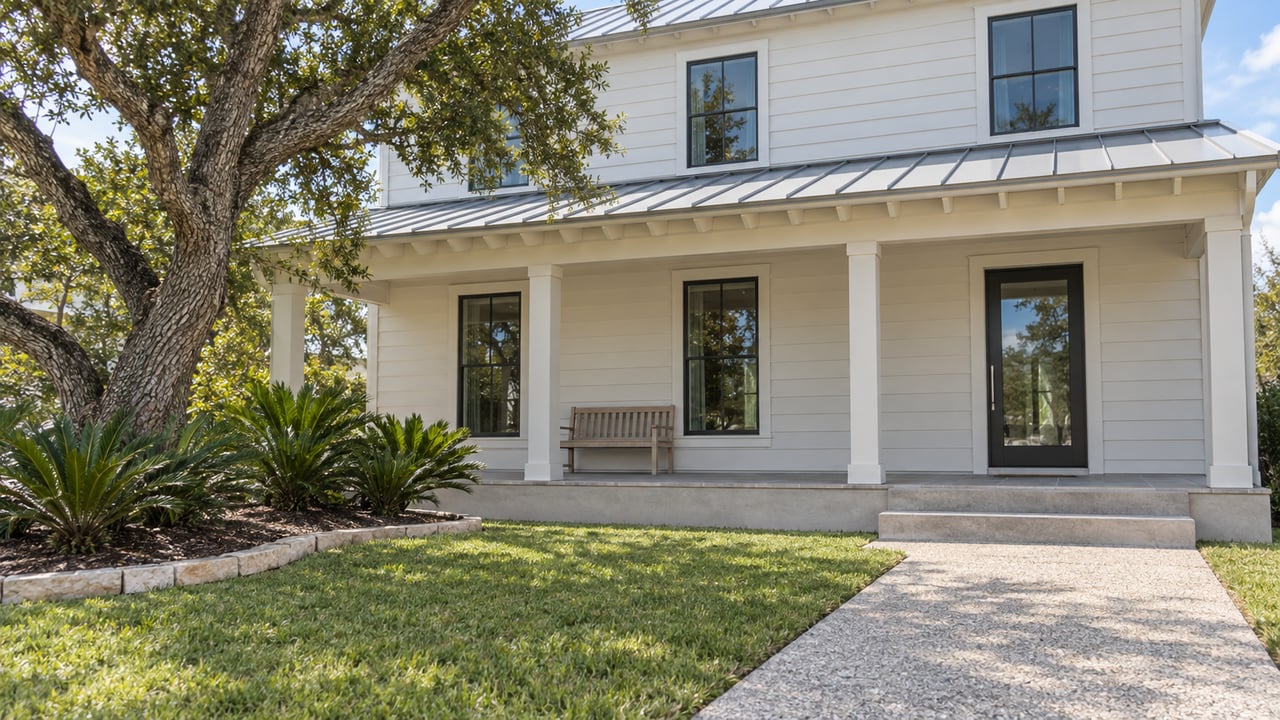
- WaterColor. A five-member Board of Directors governs the association (HOA control from 2013 after St. Joe turnover). The Design Review Board administers Design Guidelines for new homes, modifications, landscaping, pools, lighting, and other improvements. Town Architect / architectural consultants support that review. Coastal cottage language (porches, metal roofs, fiber-cement) is the visual brand; paint and pavers are not weekend DIY. Town Center and beachside condo products can have separate management companies and assessments. Pull the budget for the product type. Covenant surprises are expensive at closing and after.
- What diligence questions change by town?
- Seaside diligence
- Street HOA packet for the exact cottage (not “Seaside-wide” assumptions).
- Pavilion access tied to that street for owners and authorized guests.
- SARC / Seaside Code path for any exterior plan.
- Parking program, shuttle, and peak-weekend logistics.
- Walton County short-term rental registration stack and responsible-party coverage if income matters.
- How often you want Central Square foot traffic versus quiet evenings.
WaterColor diligence
Product and phase: Beach Club / Town Center condo vs single-family north of 30A vs lake-district pattern.
Amenity access: Beach Club and Camp rules, wristband guest policy for the address.
Short-Term Rental Portal registration and Annual Owner Certification if use is under six months; phase restrictions (including Phase 5) in recorded docs.
Design Review Board path for any exterior plan.
Parking, one-LSV-per-address, and no boat/RV-in-community rules.
Flood, elevation, and insurance for the parcel (amenity photos are not a flood-zone substitute).
Current tennis / amenity closures or redevelopment notes before you buy “for the courts.”
How should a luxury buyer read price without false precision?
Both communities sit in a high luxury band on central 30A. A single “Seaside costs X / WaterColor costs Y” line is usually false precision. Compare like with like (cottage vs single-family, gulf-proximate vs interior / lake, Town Center condo vs detached, renovated vs original) and ask for recent closed comps in the same address class. The useful question is which product in which covenant system matches your use case and timeline.
How does The Jonathan Hill Team help from out of town?
We map your use case (short term rental, second home, or primary home), timeline, and non-negotiables first, then compare WaterColor and Seaside with live tours and a same-day written recap so the decision is about how each place actually lives, not about brochure names. Search inventory on J30A.com; hire counsel on this site. Call The Jonathan Hill Team at (205) 370-5905. Office: 495 Grand Blvd, Suite 206, Miramar Beach, FL 32550. Broker Jonathan Hill, FL BK3323086.