What To Know Before Buying In Seaside
July 2, 2026
July 2, 2026
Thinking about buying in Seaside? It is easy to fall for the pastel cottages, walkable streets, and Gulf views, but this is a market where charm and rules go hand in hand. If you are considering a primary home, second home, or rental-oriented purchase, it helps to understand how Seaside really works before you make an offer. Here is what to focus on so you can buy with more clarity and fewer surprises. Let’s dive in.
Seaside is not a typical beach subdivision. It is a highly designed Walton County community on Scenic Highway 30A, directly on the Gulf between Destin and Panama City Beach, with a compact village layout built around pedestrian life.
The town began in 1981 and has grown into a community of more than 300 homes, along with restaurants, shops, and galleries. Seaside describes itself as the world’s first New Urbanist town, and that design approach still shapes daily life, ownership expectations, and the buying experience today.
For you as a buyer, that means the setting is part of the value. It also means you should look beyond square footage and finishes and pay close attention to access, rules, and how each property functions within the town.
Seaside offers more variety than many buyers expect. While the town is known for iconic beach cottages, the housing mix includes several property styles with very different use cases.
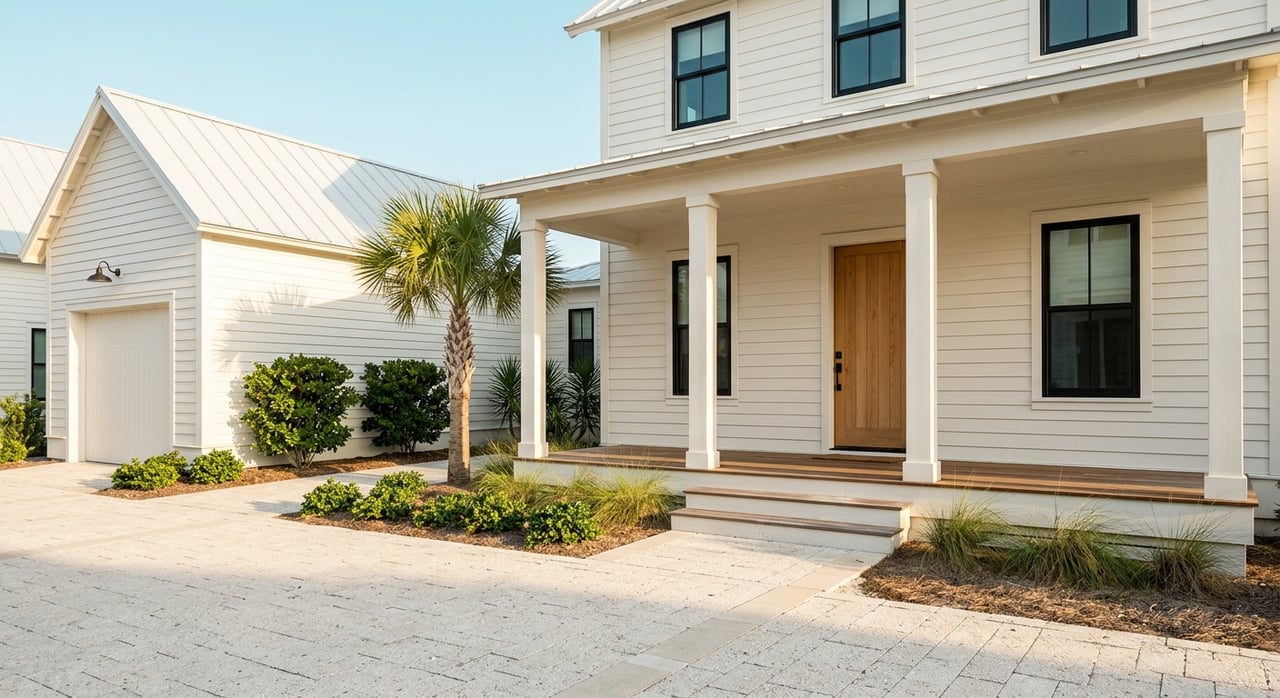
Town Center cottages are among the best-known Seaside homes. These porch-forward cottages sit near Central Square, the Airstream vendors, and the public beach pavilion, and they are often used as turnkey second homes or short-term rentals.
If you want to be close to the heart of town, this property type will likely be on your list. These homes tend to appeal to buyers who value walkability, guest appeal, and a classic Seaside feel.
At the top of the market, Gulf-front homes offer direct views and boardwalk access. Seaside describes these locations as scarce, and that scarcity matters in a town with limited developable land.
If your goal is premium positioning and direct waterfront presence, this segment is important to watch. It is also one of the hardest property types to replicate or replace in a small community like Seaside.
You may also come across interior cottages, carriage houses, and larger multi-bedroom investment-oriented homes. Sizes can range from compact cottages to multi-story residences.
This matters because Seaside is not just a detached beach-house market. Depending on your goals, a smaller property or parcel-specific rental setup may make just as much sense as a larger home.
Limited inventory is a defining feature of Seaside. The town points to its small size, limited developable land, and strict design code as factors that support long-term demand.
For buyers, low supply can make timing more important. If you are serious about buying in Seaside, it helps to understand your priorities early so you can move decisively when the right property becomes available.
One of the biggest things to understand before buying is that governance and access are not uniform across Seaside. According to the town’s FAQ, each street is managed by its own HOA.
That means two homes in the same community may not operate exactly the same way from an ownership standpoint. Buyers should review the HOA tied to the specific parcel rather than assuming the whole town follows a single set of rules.
In Seaside, beach access is tied to the specific pavilion on the street where a home sits. That is a major detail for both personal use and guest use.
The town also notes that the former public access between Seaside and WaterColor is no longer public and is owned by WaterColor, not Seaside. So if beach access is a top priority, confirm exactly what comes with the property rather than relying on a general assumption.
Seaside’s architectural regulations are detailed, and they affect more than major renovations. Exterior materials, doors and windows, porches, balconies, lighting, colors, landscaping, and sitework can all fall under design review.
In practical terms, visible changes should be treated as an approval issue, not just a personal design choice. The posted regulations include examples such as wood-only fences, native-plant requirements, no grass on residential lots, and limits on mulch and synthetic decking.
If you are buying a home with plans to update the exterior, change landscaping, or alter outdoor living areas, due diligence should include a close review of the current regulations. You will want to know what is allowed before you budget for improvements.
This is especially important in Seaside because the design consistency is part of the town’s identity. The rules help preserve that look, but they can also shape your renovation timeline and costs.
Seaside says it has three community pools, including a heated lap pool, and that these pools are exclusive to homeowners and guests. That makes amenities part of the ownership experience, not just an add-on.
The town also describes Homeowner’s Collection as Seaside’s largest vacation-rental company, owned by participating cottage homeowners and exclusive to Seaside properties. Even if you use another path for ownership planning, this setup reflects how closely guest use, property management, and ownership are connected within the community.
If rental income is part of your plan, you need to evaluate county rules along with Seaside’s internal norms. In Walton County, short-term vacation rentals require annual registration, along with applicable state tax and DBPR licensing steps.
County guidance also says rental agreements and postings must address occupancy, parking, noise, trash, and local responsible party information. Short-term rentals may be allowed in many residential zoning districts, but they still must meet standards tied to compatibility, parking, occupancy, scale, and design.
Walton County specifically names Seaside as one of the planned-unit developments with an approved exception related to accessory-dwelling-unit short-term rentals. That makes carriage-house use especially parcel-specific.
In other words, you should not assume a carriage house can be used the same way on every property. Confirm the exact rental eligibility tied to the parcel before you move forward.
Walton County also notes that HOA covenants alone do not settle rental legality. That is an important point for buyers who assume community rules are the whole story.
A property can have internal community standards and still require separate review under county requirements. If rentals are central to your purchase strategy, this needs careful due diligence.
If you plan to split time between personal use and rentals, homestead status deserves special attention. Walton County points buyers to the property appraiser and notes that renting all or substantially all of a homesteaded dwelling can affect homestead status if that pattern repeats.
That does not mean every mixed-use plan creates the same outcome. It does mean you should treat homestead questions as an early planning item instead of something to revisit after closing.
Florida’s transient rental tax rules can also matter if you plan to rent the property seasonally. Counties may impose local option transient rental taxes on stays of six months or less, so buyers should confirm collection and registration responsibilities before closing.
In a coastal market like Seaside, flood and insurance due diligence should start early. Walton County says the South Walton County Flood Insurance Rate Map became effective on December 30, 2020.
The county also participates in FEMA’s Community Rating System at Class 6, which provides a 20 percent discount on new or renewing flood policies for properties in Special Flood Hazard Areas. That can be meaningful, but you still need to confirm the specific flood zone for the property you are considering.
Before you get too far into a purchase, it helps to review:
This is one of the most important budget items in any coastal purchase. It is much better to understand it up front than to discover it late in the contract process.
Seaside is active year-round, but daily life can shift a lot with the season. The town’s event calendar includes recurring activities such as farmers markets, movie nights, children’s theater, live music in the amphitheater, and daily vinyasa yoga from March 1 through October 31.
That energy is part of the appeal, especially if you want a home in a lively coastal village. At the same time, you should understand how a property feels during peak vacation periods, not just on a quiet weekday.
Seaside has a managed parking program that returns for the 2026 season, with hourly rates that vary by occupancy levels and town events. Guests can also use a complimentary shuttle from a designated lot off Highway 331 South.
For Town Center stays, vacation-rental agencies provide parking passes for designated areas. The town also notes that pavilion reservations may sell out during peak times, which shows how demand can affect daily convenience.
Because Seaside is so location-specific, your due diligence should be detailed and practical. A beautiful home may still be the wrong fit if the access, rental setup, or seasonal function does not match your goals.
As you compare options, focus on these questions:
Those answers often matter just as much as layout, bedroom count, or interior finishes.
Seaside offers a rare mix of design, walkability, Gulf access, and long-term appeal. It also comes with tighter controls and more parcel-specific details than many buyers expect in a beach market.
If you go in with a clear understanding of HOA structure, beach access, architectural review, rental eligibility, insurance, and seasonality, you can make a much more informed decision. In a micro-market like Seaside, local detail matters.
If you want help comparing Seaside properties or understanding how a specific home fits your goals on 30A, Jonathan Hill can help you navigate the details with a local, broker-led approach.
Stay up to date on the latest real estate trends.
30A
From HOA fees and insurance to assessments, rental restrictions, and beach access, here’s what every Florida condo buyer should consider before purchasing.
Owning a Second Home on 30A: What to Expect
Looking for expert advice in the 30A real estate market? The Jonathan Hill Team is ready to provide you with the insight and expertise you deserve.