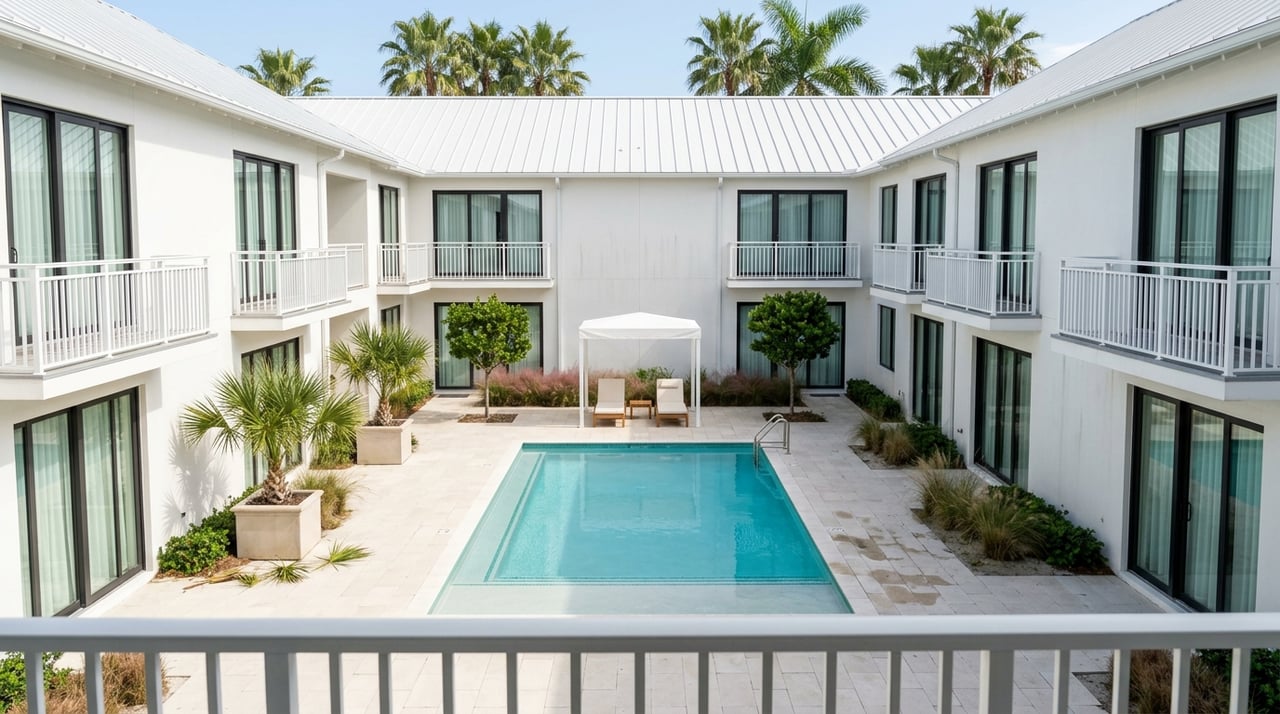
Santa Rosa Beach Homes Or Condos: How To Decide
Jonathan Hill May 7, 2026
Jonathan Hill May 7, 2026
Trying to choose between a home and a condo in Santa Rosa Beach? It sounds simple until you start comparing upkeep, rental rules, fees, parking, privacy, and how often you will actually use the property. In a coastal market this nuanced, the right choice depends less on the label and more on how you want to live, invest, and manage the property over time. Here’s how to think through the decision with more clarity. Let’s dive in.
Santa Rosa Beach is not a one-size-fits-all market. It is South Walton’s oldest and largest neighborhood, and South Walton itself spans a 26-mile corridor made up of 16 beach neighborhoods, according to the South Walton overview. That means the difference between a detached home, townhome, or condo can vary a lot by community, location, and association structure.
Price also shapes the decision. Santa Rosa Beach remains a premium coastal market, with research showing average home values around $865,262, while condos can offer a lower entry point in many cases. Even so, either path can be a significant investment, so it helps to look beyond the purchase price and focus on the full ownership picture.
Before you compare floor plans or amenities, think about your real use case. Will this be a second home, a lock-and-leave getaway, or a property you plan to rent part of the year?
That question matters because Santa Rosa Beach buyers often discover that a property’s rules, maintenance demands, and operating costs affect how you use it more than the property type itself. In other words, the best fit usually comes from matching the property to how you will use and rent it, not just your wish list.
A detached home usually gives you the most privacy and the most control over how you use the property. If you want a yard, more separation from neighbors, or a stronger primary-residence feel, a house often checks those boxes better than a condo.
This option can also appeal to buyers who want more flexibility with renovations and exterior use. That said, you should not assume a house automatically means fewer restrictions. In Florida, many homes are still located within HOA-governed communities, and those rules can matter just as much as the home itself.
The biggest tradeoff is maintenance. With a detached home, more of the upkeep usually falls on you, including exterior care, landscaping, and general property oversight unless the community covers part of it.
You also need to review HOA documents carefully when a home sits in a planned community. Under Florida’s HOA statute, unpaid assessments can become liens, and reserve accounts may be optional unless approved by the membership, which can affect long-term fee pressure and future expenses. You can review those rules in Florida Chapter 720.
For many second-home buyers, condos offer the easiest ownership experience. They often work well as a true lock-and-leave option, especially if you want less day-to-day upkeep and value shared amenities.
A condo can also be a practical way to enter the Santa Rosa Beach market at a lower price point than a detached home. If you plan to visit seasonally and want a simpler setup when you are away, that lower-maintenance model can be very appealing.
The tradeoff is that condos are more association-driven. Florida’s Condominium Act makes the association responsible for common elements and requires the association to use its best efforts to obtain and maintain adequate insurance for the property it must insure, as outlined in Florida Statute 718.113.
That can reduce your maintenance burden, but it also means you have less control over building-level decisions. You should pay close attention to the declaration, current fees, insurance details, parking rules, rental restrictions, reserve funding, and the possibility of special assessments.
Florida condo law also requires milestone inspections and structural integrity reserve studies for certain multi-story residential buildings. The Florida DBPR condo FAQs explain why reviewing reserve health and financial reporting is especially important before you make an offer.
Townhomes often sit between a detached home and a condo. In many Santa Rosa Beach communities, they appeal to buyers who want some privacy and a more home-like layout while still reducing some exterior maintenance.
The key is understanding the legal and maintenance structure. Some townhome communities are governed under Florida HOA law, but what the association actually covers can vary widely. You should confirm whether exterior maintenance, landscaping, roofs, and common areas are covered, rather than relying on the property style alone.
If rental income is part of your plan, you need to look at county rules and association rules together. In Walton County, a short-term vacation rental is generally defined as a property rented more than three times in a calendar year for periods of less than 30 days or one calendar month, and the county requires annual registration for short-term rentals through its Short-Term Vacation Rental Certification program.
The county also notes that some condominiums are excluded from the county certification process, though they still must comply with state requirements and tax registrations. That distinction can be important if you are comparing a condo project with a detached home or townhome.
At the state level, Florida distinguishes between a vacation rental condominium and a vacation rental dwelling. According to the state’s vacation rental licensing rules, a condo license applies to a unit or group of units in a condominium or cooperative, while a dwelling license applies to a single-family house, townhouse, or certain small multifamily dwellings.
In plain language, your rental strategy may work in one property type and community but not another. That is why it is so important to verify the declaration, HOA or condo rules, and licensing path before you buy.
Your intended use matters just as much as the rules. If you are buying as a full-time resident, a detached home may offer a stronger fit if you want a more traditional living setup and fewer shared-building decisions.
Walton County also notes in its short-term rental FAQs that certain primary residences occupied full-time by the owner and declared as homestead may be exempt from the county short-term vacation rental certification process. For some buyers planning to live in the property full time, that can make a house feel more practical than a rental-oriented condo.
If you are buying as a second-home owner or investor, a condo or townhome may still be the better fit, especially if reduced maintenance is a high priority. But you will want to confirm occupancy limits, parking rules, rental minimums, and any advertising requirements tied to short-term rentals.
Property type | Best for | Main advantage | Main caution |
|---|---|---|---|
Detached home | Full-time living, more privacy, yard space | More control and privacy | More upkeep and possible HOA restrictions |
Townhome | Buyers wanting balance | Some convenience with a more private feel | Association coverage varies widely |
Condo | Second homes, lock-and-leave use, amenity-focused buyers | Lower-maintenance ownership | Greater exposure to association budgets and assessments |
A smart decision usually comes down to a few practical questions:
In Santa Rosa Beach, those answers often tell you more than the word “home” or “condo” ever could. A detached house in one neighborhood may feel more restrictive than a condo in another, while a townhome may deliver the best balance depending on the association structure and your ownership goals.
If you want privacy, more control, and a primary-home feel, a detached home may be the right move. If you want a simpler ownership experience and easier lock-and-leave living, a condo may make more sense. If you want something in between, a townhome can be worth a close look.
The key in Santa Rosa Beach is to evaluate the micro-market, the association documents, and your use plan together. If you want help comparing specific properties, neighborhoods, or ownership structures, connect with Jonathan Hill for local guidance tailored to how you want to live on the Emerald Coast.
Related: Santa Rosa Beach neighborhood guide · 30A & Santa Rosa Beach FAQ · Santa Rosa Beach realtor.
Stay up to date on the latest real estate trends.

Monthly Blog
Monthly Blog
Monthly Blog
Monthly Blog

Monthly Blog
Monthly Blog
Looking for expert advice in the 30A real estate market? The Jonathan Hill Team is ready to provide you with the insight and expertise you deserve.